
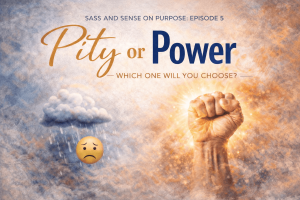
 Who are you mad at right now? Maybe it’s something small. Maybe it’s something that genuinely hurt. Either way, when anger settles in, it has a way of growing. What started as a moment becomes a conversation in your head. Then it becomes an attitude. Before long, it begins shaping how you see everything around you.
That’s the nature of anger, it festers. It pulls focus away from what matters and places it on something that often deserves far less of our attention than we give it.
There are things in life that are truly painful. Hurt is real. Disappointment is real. But God warns us about dwelling in anger because it slowly steals our joy and divides our peace. Anger doesn’t just stay contained, it spreads into our relationships, our work, and even how we see ourselves. And the truth is, discouragement thrives when we stay stuck there.
Anger is a bitter pill. It drains energy that could be used for growth, purpose, and healing. It affects how we respond to others and how we move forward. Even when we think we’ve moved on, unresolved hurt has a way of resurfacing unless it’s truly forgiven and released.
I’ve experienced this myself. I’ve been hurt by people I genuinely tried to help and support. When things didn’t turn out the way I expected, I felt angry, confused, and deeply disappointed. At one point, I realized I had lost nearly two years of joy dwelling on something I couldn’t change, something I knew, deep down, had unfolded the way it needed to.
The hurt didn’t disappear overnight. And it shouldn’t be dismissed. People are imperfect, and at some point we will all hurt one another. Sometimes people speak carelessly. Sometimes we misunderstand intentions. And sometimes wounded people simply react from their own pain.
Not everything deserves a permanent place in our thoughts. If we could let more things roll off our backs, like water off a duck’s feathers, we would protect so much of our peace. Many offenses are moments, not lifelong wounds. Most people are not plotting against us, they are simply human, distracted, or unaware of the impact of their words.
But once anger takes hold, it becomes our responsibility to release it. That doesn’t mean ignoring real issues. If something truly matters, address it. Talk about it. Pray about it. Resolve what you can. And then let it go.
Holding onto anger doesn’t punish the other person, it quietly punishes you.
I’ve read often about how emotional stress affects the body. While not every illness is caused by stress or anger, it’s undeniable that these emotions place strain on both mind and body. They pull energy away from healing and redirect it toward conflict and unrest.
When you step back and look honestly, most of what frustrates us isn’t worth the cost. Ninety percent of daily annoyances can simply be released. Your peace is more valuable than proving a point.
Anger keeps us in pity, focused on what was done to us. Forgiveness restores power, allowing us to move forward without carrying the weight.
So make peace where you can. Ask for forgiveness when needed. Extend it when it’s hard. And when resolution isn’t possible, release the offense anyway.
Refusing to forgive doesn’t trap the other person, it traps you.
Choose peace. Choose clarity. Choose power.
And if you need a reminder… yes, even Elsa had it right. Let it go.